
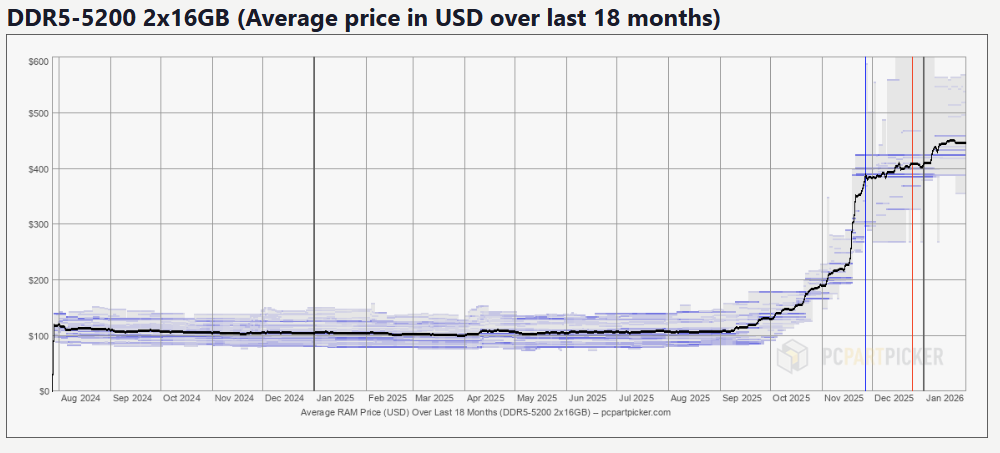
If you’ve tried to buy a new laptop, upgrade a desktop, or even just price up a simple memory bump lately, you’ve probably had the same reaction I’ve had: why is this suddenly so expensive – and why is everything on backorder?
Uncategorized
If you’ve tried to buy a new laptop, upgrade a desktop, or even just price up a simple memory bump lately, you’ve probably had the same reaction I’ve had: why is this suddenly so expensive – and why is everything on backorder?
For 2026, the trend I’m watching closest isn’t a new brand of device or a flashy app. It’s something more fundamental:
We’re in a global squeeze on RAM and SSD storage, and the AI boom is a major reason why.
That might sound dramatic, but the effects are already showing up in the real world for everyday users:
Let’s break down what’s going on, why AI is changing the hardware equation, and what I recommend doing about it.
There are two components inside almost every modern device that quietly decide whether it feels fast or frustrating:
Think of RAM like the size of your workbench.
More RAM = you can keep more things open and working smoothly at once.
Think of your SSD like your filing cabinet – but also the “floor space” your computer needs to breathe.
More SSD space = you can store more data, and your computer has room for updates, caches, temporary files, and (increasingly) AI features.
For years, both were on a pretty predictable track: you could generally get more for less, year after year.
That pattern has now been broken.
A lot of people assume shortages are always caused by shipping issues or factory shutdowns. This one is different.
The simplest way I can explain it is:
To run modern AI at scale – whether that’s training models, serving millions of requests, or running “AI copilots” inside products – data centres need enormous amounts of:
Those data centres are buying at a scale that normal consumer markets can’t compete with. And when supply is tight, manufacturers naturally prioritise the biggest, most profitable customers.
So even if you never touch AI directly, the AI build-out is still affecting your next laptop price.
Here’s what I’m seeing play out for everyday users and small-to-mid businesses.
When RAM and SSD pricing rises, it hits:
It also shows up indirectly as “value engineering,” like:
It’s not always a total “out of stock” situation. Sometimes it’s:
That’s usually a supply allocation problem, not a retailer being difficult.
When replacement costs jump, people delay upgrades. That’s understandable.
But older devices often come with:
There’s another part to this story that doesn’t get enough attention:
AI features are moving onto the device.
A year or two ago, most AI happened in the cloud. Now we’re seeing more of it run locally on PCs and phones, because it’s faster, cheaper (at scale), and sometimes better for privacy.
The catch is that on-device AI needs:
As an example of how this is changing the market: to qualify for Microsoft’s Copilot+ category, the baseline includes 16GB RAM and 256GB storage — and that’s a minimum, not a recommendation.
Once you add:
…you can see why 16GB is quickly becoming the new starting point, not a luxury.
Even without AI, modern systems chew through storage via:
Add AI features that store local data (even if it’s encrypted and protected), and small SSDs become painful fast.
If you’re planning a purchase or refresh this year, here’s the advice I’m giving clients and friends.
AI isn’t just changing apps – it’s currently changing the supply chain that underpins the tech industry.
The same AI boom that’s delivering smarter tools to end users is also driving demand for the hardware building blocks behind the scenes. That’s why RAM and SSD pricing and availability have become one of the most important quiet trends of 2026.
If you’re planning upgrades, refresh cycles, or even just trying to avoid buying the wrong device spec, this is the year to be deliberate.
And if you want a second opinion before you purchase (or you need a procurement plan that won’t fall over when supply gets tight), that’s exactly the sort of work we do at Layer3.
Keep reading
Next step
Most organisations do not have an IT problem. They have an accountability problem. We fix that first, then the technology gets easy.
Our services

Layer3 is a managed IT provider operating an ISO/IEC 27001-certified ISMS, with offices across New Zealand.
Contact
0508 LAYER3 Book a discovery call Service status Notices
Level 2, CBD Towers
84-90 Main Street
Upper Hutt, Wellington 5018
© 2026 Copyright Layer3.






Layer3
Book a discovery call - 30 minutes, no obligation