OpenAI Dots: What They Are and Why They Matter for Business
For the last few years, most businesses have experienced AI through a fairly familiar interaction. You open ChatGPT, ask it a question, give it some information and it produces something useful.
AI
For the last few years, most businesses have experienced AI through a fairly familiar interaction.
You open ChatGPT, ask it a question, give it some information and it produces something useful. That might be an email, a report, some research, an analysis of a document, or help solving a technical problem.
OpenAI’s newly announced Dotstake that idea considerably further.
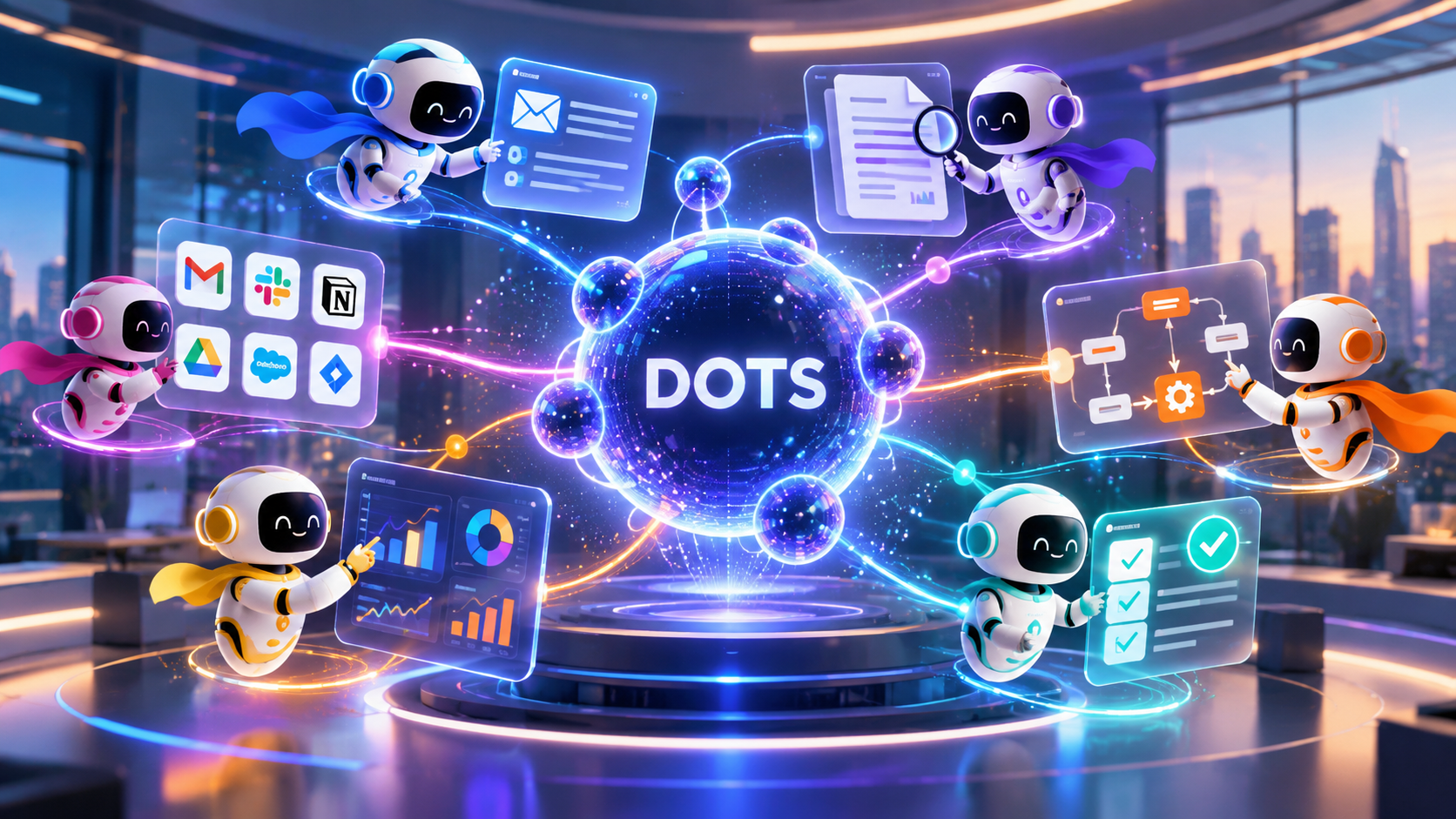
Rather than simply being AI that you interact with when you need something, Dots are designed as always-on AI agents that can continue working towards goals on your behalf. They have their own cloud computer and browser, can connect to business applications, and can continue working without you having to direct every individual step.
That distinction is important, because it gives us a good indication of where business AI is heading.
So, what exactly is a Dot?
The easiest way to think about it is this:
GPT provides the intelligence. A Dot gives that intelligence an ongoing role, tools and the ability to act.
A Dot is powered by OpenAI’s AI models, but it also has its own working environment. It can use a browser, access applications you have authorised, keep track of longer-running work and continue working while you are doing something else.
OpenAI says Dots can connect to more than 4,000 applications through its plugin ecosystem and can be accessed through ChatGPT, Microsoft Teams and Slack, with additional communication options planned.
Instead of repeatedly asking AI to perform isolated tasks, you can give a Dot an objective and allow it to work towards that objective over time.
How is that different from using ChatGPT?
ChatGPT is already capable of doing far more than simply answering questions, particularly with tools, connected applications and agentic features.
The biggest difference with Dots is continuity.
With traditional AI use, the interaction often looks something like this:
You ask a question.
AI gives you an answer.
You review it.
You provide the next instruction.
A Dot is designed to continue the process.
For example, rather than asking AI every Monday to review a set of reports and identify anything unusual, you could potentially give a Dot responsibility for monitoring that information.
When something changes, it could investigate further, gather the relevant context and bring the issue to you when a decision is required.
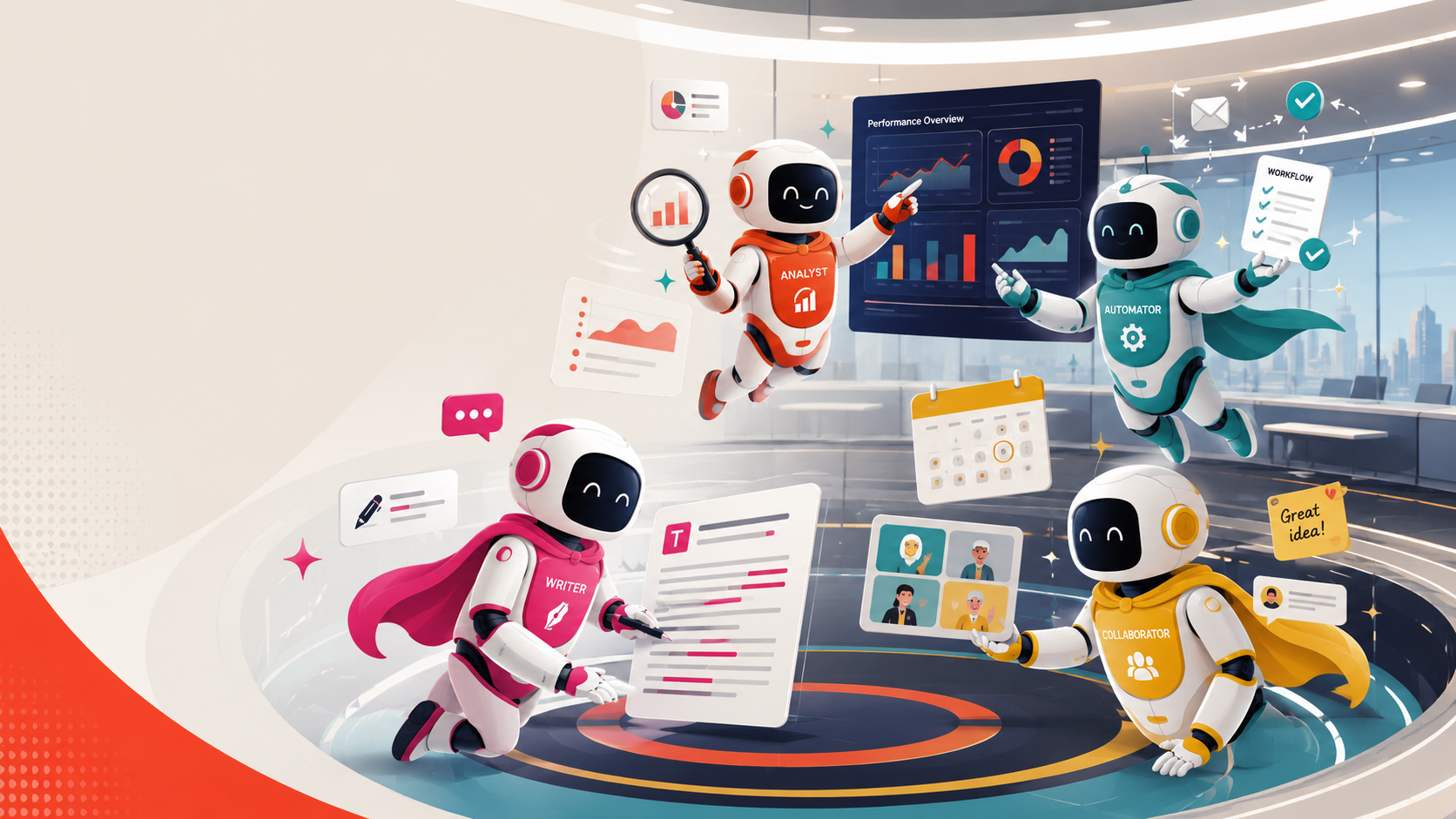
That moves AI from being primarily a tool you operate to something closer to a digital member of your team.
What could this look like inside a business?
There are a lot of potential uses.
A sales team could have a Dot keeping track of opportunities, customer correspondence, requirements and outstanding actions.
A management team could use one to continually review reports, projects and operational information and highlight areas that need attention.
A marketing team could use a Dot to monitor incoming material, prepare content and update campaigns as information changes.
A development team could have one watching feedback, investigating recurring bugs, building smaller fixes and preparing work for human review.
OpenAI has also described an example where a Dot recognised that an invoice had not been sent, prepared it and then sent it after receiving approval from the user.
The important part isn’t any one of these examples.
It is that the AI is following the work as it changes, rather than waiting for someone to remember to ask it what to do next.
Does that mean giving AI full control?
No, and this is probably one of the most important parts for businesses to understand.
Giving an AI system access to company information and applications obviously introduces security, privacy and governance considerations.
OpenAI has built Dots around permissions and approval controls. Organisations can determine which applications a Dot can access, establish rules around actions it is allowed to perform, require approval for particular activities and prevent others entirely.
Dots also separate their own cloud computer from your local computer unless you specifically choose to connect them.
When a Dot is doing proactive background research, OpenAI says the connected tools it uses are restricted to read-only access. Actions that could affect accounts or disclose information are subject to additional review and approval controls, and some sensitive activities remain with the user.
That human oversight is going to be critical.
The goal shouldn’t be to give AI unrestricted access to everything.
It should be to determine what work can safely be delegated, what information the AI actually needs, and where a person should remain responsible for the final decision.
For any Layer3 customers, we will always recommend completing an AI readiness assessment to ensure that your environment is configured correctly for Dots.
The bigger change: from prompting AI to managing AI
This is probably the most interesting part of Dots.
For the first phase of generative AI, organisations have concentrated heavily on prompting.
How do we ask ChatGPT better questions?
How do we write better instructions?
How can staff use Copilot or ChatGPT more effectively?
Those skills are still useful, but AI agents introduce a different question:
What responsibilities can we safely hand to AI?
That requires businesses to start thinking about AI in the same way they already think about access to other business systems.
What information should it see?
What systems should it access?
What is it allowed to change?
What requires approval?
How do we audit what it has done?
Who remains accountable for the outcome?
Those are ultimately technology governance questions as much as they are AI questions.
Where do Dots fit today?
Dots were announced by OpenAI on 30 September 2026 (NZDT) and are beginning to roll out across eligible ChatGPT plans and markets. OpenAI is also developing specialist Dots intended for organisations, where an AI agent can be given its own identity, credentials and access to the systems required for a defined business responsibility.
OpenAI is also working with Microsoft to bring specialist Dots into Microsoft’s Agent 365 governance and security environment, which will be particularly relevant for organisations already heavily invested in Microsoft 365.
It is still early, and businesses shouldn’t rush to automate everything simply because the technology exists, and we highly recommend they don’t. But the direction is becoming clear.
We are moving from AI that helps us complete individual tasks towards AI that can participate in ongoing business processes.
For many organisations, the next stage of their AI strategy therefore won’t simply be choosing which AI product to buy.
It will be deciding where AI should work, what it should be trusted with, and how it should be governed.
At Layer3, these are the areas we think businesses should be starting to explore now.
AI adoption isn’t just about deploying another application. Done properly, it needs to sit alongside your existing security, identity, data governance and business processes.
And Dots are a good example of why that conversation is becoming increasingly important.